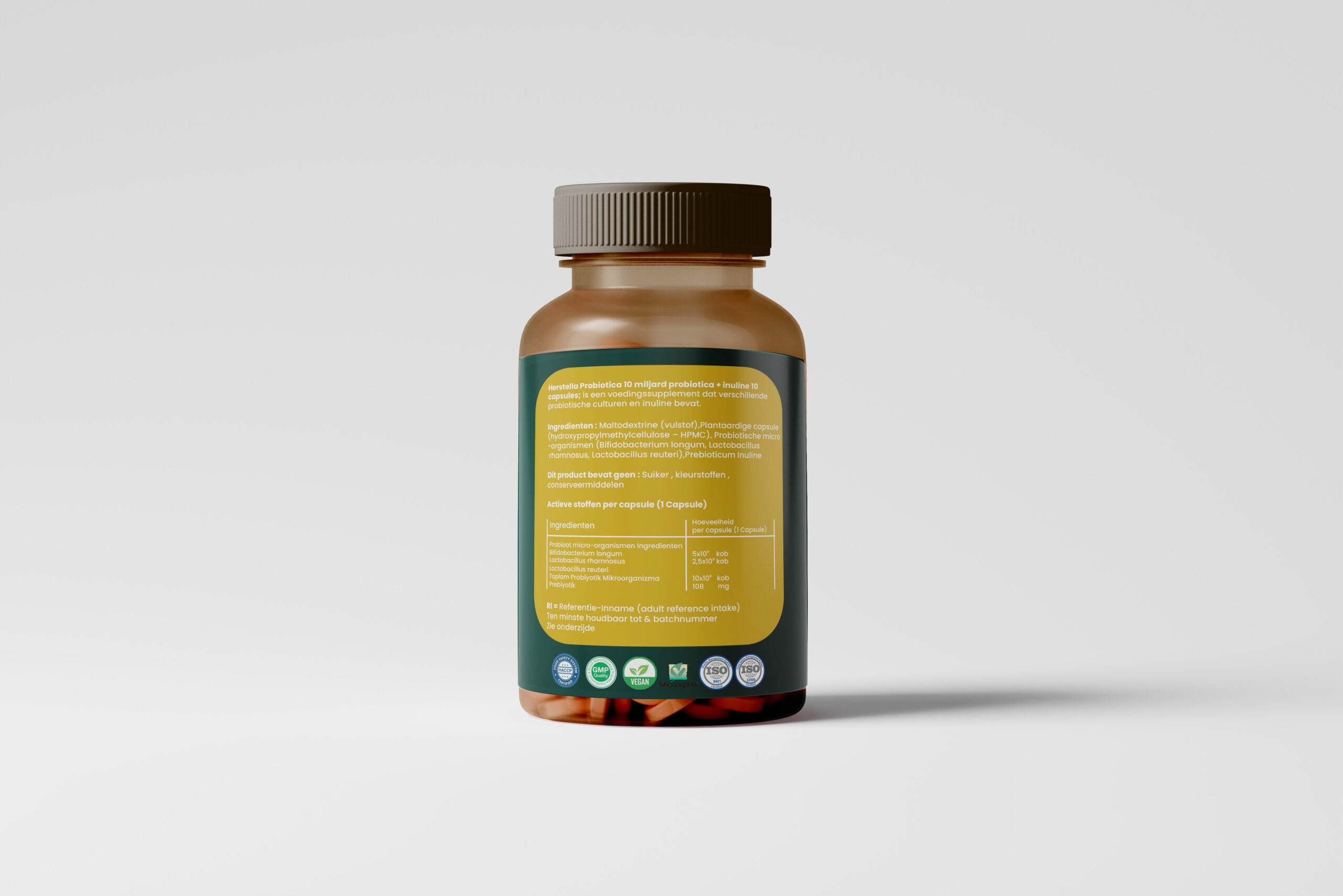
PROBIOTICS (PROBIYOFERT 10 BILLION)
What is the difference? Probiotics vs. Prebiotics
Probiotics are live microorganisms (such as bacteria or yeasts) that, when consumed in adequate amounts, are intended to play a role in the intestinal flora. They add active cultures to the microbiome.
Prebiotics are indigestible food components—typically fibers—that serve as nourishment for existing, beneficial bacteria in the gut.
In short: prebiotics feed probiotics.
Probiotic Cultures
CFU stands for Colony Forming Units—a measure of the number of live bacteria per dose. A concentration of 10 billion (10
10
) CFU is a level frequently utilized in scientific studies on gut microorganisms.
Probiotic bacteria pass through the stomach to reach the small and large intestines, where they can temporarily reside and interact with the existing microbiome.
Herstella Probiotica features a multi-strain formula. This means multiple bacterial strains are combined, providing a broader reach within the intestinal tract compared to single-strain products. Each strain has its own unique function and preferred site in the gut.
Bifidobacterium longum
Bifidobacterium longum is one of the most prevalent bacterial species in the human large intestine. It is particularly abundant in infants and gradually declines with age.
This bacterium ferments dietary fibers, producing short-chain fatty acids (SCFAs) such as acetate and propionate. These substances play a role in the normal function of the intestinal wall and serve as an energy source for gut cells.
Within the formula, B. longum primarily targets the large intestine. In combination with other strains, this contributes to a broader coverage of the intestinal tract.
Lactobacillus rhamnosus
Lactobacillus rhamnosus is a lactic acid bacterium that occurs naturally in the gastrointestinal tract and in fermented products. It is one of the most extensively researched probiotic strains
This bacterium produces lactic acid, which can influence the acidity (pH) within the gut. Furthermore, L. rhamnosus adheres effectively to the intestinal wall and can remain present in the digestive tract for a period of time.
Within the formula, this strain forms a vital foundation due to its broad applicability and stability in the gastrointestinal environment.
Lactobacillus reuteri
Lactobacillus reuteri is a unique strain that can be found in both the small and large intestines.
Among other substances, this bacterium produces reuterin, a compound involved in maintaining the balance of the microbiome. Additionally, L. reuteri can produce small amounts of nutrients such as folate.
Due to its broad presence throughout the intestinal tract, this strain constitutes a valuable addition within a multi-strain formula.
Prebiotic Inulin
Inulin is a soluble dietary fiber extracted from the root of the chicory plant (Cichorium intybus). It serves as a nutritional source for bacteria in the large intestine.
During fermentation by gut bacteria, short-chain fatty acids (SCFAs) are produced. This process plays a vital role in maintaining the intestinal environment.
Inulin is included as a prebiotic component to support the included probiotic strains.